Even if you have well-optimized creative that demands user attention, that attention doesn’t always translate to engagement.
To avoid ads that feel disruptive or unnatural, try native ads. Native ads offer an approach that feels like a natural extension of the user's journey. Advertisers who use a mix of banner ads and native ads can craft a better narrative that drives meaningful interactions.
What Is Native Advertising?
Native advertising is a digital advertisement that blends into a website or mobile app’s natural flow of content. This type of advertising uses identifiers like “Suggested Posts” or “Sponsored Content” to distinguish itself from organic content while matching a platform’s look and feel.
Native advertising emphasizes better user experience by being less disruptive or jarring. It complements traditional ads without detracting from their ability to capture attention.
There are a few types of native ads, all subtly integrated messages that add value without intruding and are marked by discreet labels that signify they’re paid ads.
Types of Native Ads
In-feed/In-content ads
In-feed native ads position within content feeds (such as news or social media apps) to ensure they flow with the surrounding content. These ads mimic the platform’s design and function; they’re often labeled as “sponsored” or “promoted” to maintain transparency.
In-feed native ads come in a variety of formats:
Static images
Videos
Interactive elements
Headlines
The goal is to capture the user’s attention without disrupting their engagement with the content stream.
On the other hand, in-content native ads are integrated directly within individual pieces of content:
News articles
Blog posts
Editorial features
These ads are placed between paragraphs or after, ensuring they complement the narrative of the page. In-content native ads match the visual and editorial style of the surrounding content, making them indistinguishable from organic content at first glance.
In-feed and in-content native ads are both delivered programmatically. Platforms use real-time bidding to optimize their placement, and advertisers can adjust native ad campaigns based on audience demographics, interests, behaviors, and contextual relevance. More personalized ads mean more engagement and higher conversion rates.
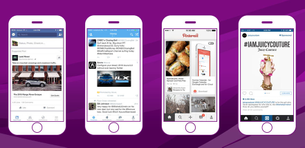
Captivate your audience effortlessly while blending seamlessly with the platform’s content for optimal engagement and conversion
Content recommendation ads
Content recommendation ads suggest relevant content to users based on browsing behavior and preferences. These ads usually appear as widgets within a webpage under labels like “Recommended for you” or “You might also like.”
Unlike traditional ads being overtly promotional, content recommendation ads try to better align with user interests. These ads also allow users to direct themselves to an external page or URL within the source publisher’s website, maintaining customer journey flow while still being transparent.
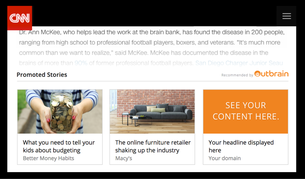
With content recommendation ads, tailored suggestions seamlessly blend with content, offering value and sparking curiosity.
Branded/native content
Branded native content — also known as brand content, sponsored content, or custom content — represents strategic collaboration between brands and publishers to create paid content disguised into the publisher’s site.
Advertisers can use branded content to complement their owned content, but making branded content requires more strategy than other forms of native advertising. Typically, publishers work in collaboration with the brand or specialized content marketing agencies.
Branded content needs careful scheduling, tracking, and reporting, usually with a lot of manual effort. All this management is usually supported by the publisher or the content marketing agency — it’s not typically something that’s offered programmatically.
This hands-on collaboration ensures the content meets both the brand’s objectives and the publisher’s standards. And the key with content recommendation ads is working with the publisher to ensure they’re both relevant and transparent.
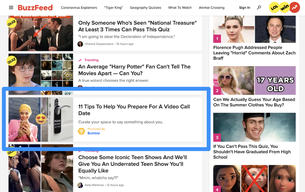
This type of content offers a strategic blend of brand messaging and editorial integrity, delivering value, building trust, and engaging audiences authentically.
Advantages of Native Advertising
Since native ads blend in with surrounding content, you need to brainstorm images, titles, and descriptions that match user preferences without feeling obtrusive. With the right approach, native advertising has an array of benefits:
Blending in vs. standing out
Since native ads mimic the look and feel of the platform they appear on, this approach avoids feeling disruptive. Traditional display ads, on the other hand, are designed to stand out. A good ad strategy involves a mix of the two, allowing native ads to blend in with editorial content.
More attention
Users see native ads as less intrusive. This non-disruptive nature encourages higher engagement levels: native ads are 53% more likely to be looked at than display ads.
Access to high-value publishers
Native advertising gives you access to premium publishers, including well-known platforms like CNN, Forbes, and The New York Times. Native ads can reach targeted audiences interested in specific topics or industries on high-traffic websites.
Scalable content deployment
Native advertising is scalable. You can run content and creative assets across multiple platforms without needing significant adjustments. Scalability means it’s easier for you to reach a broader audience and optimize campaigns for different channels. Less effort but higher engagement? Yes, please.
Enhanced brand affinity and conversion
Native ads provide value to users. If you use less intrusive ads, users are less likely to feel ad fatigue or frustration with your brand. Native ads generate higher brand recall, conversion rates, and positive sentiment among audiences.
Pro Tip: Scale your campaigns and achieve superior results by tapping into AdRoll’s extensive inventory, spanning multiple native ad networks. Benefit from targeted and strategic ad placements to boost brand visibility, engagement, and campaign performance.
Native Advertising vs. Other Marketing Forms
Native advertising vs. display advertising
Ideally, you’ll use both native and display ads as part of your strategy.
According to the stats, native ads offer better user engagement than display ads in terms of consumer attention and response: consumers engage with native ads 53% more frequently than display ads, indicating preference for content that blends naturally with the platform’s editorial flow. Some social media platforms like X and Facebook have embraced native advertising since it improves ad performance.
However, compared to display ads, native ads have less control over ad design. Display ads are meant to be punchy and impactful, giving advertisers room to create more customized and attention-grabbing creatives.
Feature | Native Advertising | Display Advertising |
|---|---|---|
Appearance | Blends into the platform’s editorial content | Distinct, clearly labeled ads |
User Experience | Non-disruptive; flows with the user’s reading or scrolling habit. | Can be more attention-grabbing and obtrusive |
Engagement | 53% higher frequency than display ads due to contextual relevance | High awareness and scroll-stopping effect |
Design Control | Limited; the ad must mirror the host site’s UI and typography. | High; advertisers have full control over colors, fonts, and animation. |
Primary Goal | Engagement, brand affinity, and content discovery. | Direct response, quick conversions, and broad brand visibility. |
Placement | Social feeds (X, Facebook), "For You" sections. | Header, footer, popup, or sidebar of websites and apps. |
Native advertising vs. social media advertising
Native and social media advertising both blend into their environments. In-feed social ads mirror native ads’ integration strategy — both are less disruptive.
However, advertisers have different objectives for the two types. Social media advertising works in a walled garden and is bound to a specific social network. In contrast, native ads appear across the open web. The goals with social advertising usually involve building brand followings within social networks, fostering engagement, and improving visibility. On the other hand, native ads direct potential customers to the advertiser’s website, and drive conversions.
Feature | Native Advertising | Social Media Advertising |
|---|---|---|
Ecosystem | Open Web: Appears on news sites, blogs, and niche publications. | Walled Garden: Exclusively within platforms like Facebook, IG, or X. |
Integration | Mimics the style of the website it's hosted on. | Mimics UGC of the social feed. |
Primary Goal | Driving traffic to an external website for deep content engagement. | Fostering zero-click engagement. |
Targeting | Based on user interests, behaviors, and site context. | Granular data based on social profiles and platform activity. |
User Intent | Users are usually in a learning or discovery mindset. | Users are in an entertainment mindset. |
Reach | Thousands of diverse websites across various ad networks. | Massive reach, but limited to the specific social network's user base. |
Native advertising vs. contextual advertising
Contextual advertising analyzes the content of web pages — including keywords, topics, and themes — to better target with ads.
Native and contextual ads are two distinct concepts, and they synergize for better campaigns.
For example, a contextual advertising campaign can find users interested in outdoor activities based on their browsing history. Native advertising places ads promoting outdoor gear into platforms to match the site’s aesthetics.
Feature | Native Advertising | Contextual Advertising |
|---|---|---|
Definition | A format where the ad matches platform design. | A targeting method where ads match the page topic. |
Core Focus | Aesthetics & integration: How the ad looks and feels to the user. | Relevance & environment: What the content of the page is about. |
Primary Trigger | The platform’s UI. | Keywords, themes, and topics found in surrounding text. |
Privacy Impact | Relies on a mix of first-party data and site placement. | Doesn't require user cookies, only analyzes the page content. |
User Experience | Non-disruptive through platform unity. | Non-disruptive through topical interest. |
The Synergy | Provides the container for the message. | Ensures the message makes sense in that moment. |
Native advertising vs. content marketing
Native advertising and content marketing are two different things.
Content marketing is a long-term strategy that establishes trust and credibility. It’s a long-term game with lots of planning and execution.
The differences between content marketing and native advertising are their ownership and distribution. Content marketing usually lives on owned media platforms with control over content creation, format, and distribution.
In contrast, native advertising falls under paid media. While the initial investment may be higher, native advertising offers immediate exposure to established audiences.
Feature | Native Advertising | Content Marketing |
|---|---|---|
Media Type | Paid Media: You pay for space on a third-party site. | Owned Media: You publish on your owned channels. |
Speed of Results | Immediate: Instant exposure to an established audience. | Gradual: Takes time to build authority. |
Ownership | The publisher controls the environment and distribution. | The brand controls environment and distribution. |
Primary Strategy | Outbound: Pushing content out to where the eyes already are. | Inbound: Pulling a loyal audience toward owned platforms. |
ROI Timeline | High initial cost for quick response and traffic spikes. | Long-term investment that builds compounding value over time. |
SEO Impact | Minimal; mostly focused on direct traffic and clicks. | High; designed to improve search rankings and organic visibility. |
5 Tips for Building Effective Native Advertising Campaigns
1. Intentional native ad creative design
Figuring out how you’ll blend into a platform requires some careful forethought. First, avoid using company logos directly in the ad to maintain an air of seamless integration. Second, pay close attention to image selection; choose visuals that draw attention and align with your ad’s message — but not so heavily branded that it clashes with the platform. Lastly, prioritize the copywriting. If you can’t stand out with visuals, copy will be what compels a click.
Pro Tip: Take advantage of our free ad creative service to nail your native advertising campaigns!
2. Target audiences across the customer journey
Ads are better when they match the audience’s funnel stage. Like display ads, native ads offer demographic, interest-based, geographic, and lookalike targeting.
Particularly effective is contextual targeting, since native ads integrate with publisher content and contextual targeting matches user interests.
Native advertising also supports retargeting, which is a natural use case for an ad strategy that blends into publisher environments.
Pro Tip: With AdRoll’s advanced audience targeting tools, you can precisely target your audience at the right place and time.
3. Invest in your landing page and UX
You can optimize your ads all day. If your website fails to convert, your campaigns will fail.
Landing pages are integral to your campaign goals. Understand your target audiences’ interests and needs across different journey stages, conduct thorough research, and A/B test landing pages to reflect customer needs.
Pro Tip: Ensure your landing page content and user experience align seamlessly with AdRoll’s guidelines to create better interactions that drive campaign outcomes.
4. Create synergy with other advertising forms
Nobody runs one tactic on one channel, especially when the customer journey requires several touchpoints before closing a sale. This means more touchpoints will align with the customer’s path from brand discovery to conversion. By combining display, native, video, and paid search ads, you can create a better campaign that optimizes reach and conversion rates.
Pro Tip: Diversify your ad campaigns by leveraging AdRoll, where you can easily integrate various ad formats.
5. Close the loop with marketing attribution
Since native ads don’t always lead to immediate conversions, we have to rely on marketing attribution software to track conversions back to different touchpoints. This traces the impact of native ads in influencing customer behavior and contributing to campaign success. Better, more transparent marketing attribution means better insights.
Pro Tip: Use AdRoll’s cross-channel attribution capabilities to optimize budget allocation and understand channel impact.
Native Advertising Trends
Native video ads
Video is exploding in popularity. Native video ads are gaining traction because, while requiring more effort to create, these ads boast better engagement. The key to successful native video advertising is valuing users’ attention. Provide genuine value to users, be it through entertainment, information, or utility.
Dynamic native ads
Dynamic native ads combine dynamic display with native advertising — this means more personalized ads with higher engagement. These ads typically feature one product image from your feed, a company name, a compelling title, and a concise description.
They are particularly effective for retargeting, allowing brands to reengage visitors with products they’ve already viewed.
Programmatic native advertising
Programmatic native advertising improves how ads are bought and sold by automating the process through real-time bidding. It’s what we do here at AdRoll
Programmatic ads use machine learning algorithms and contextual signals to customize native ads according to user behavior and placement context. As a result, we achieve relevant ad placements at scale.
Native Advertising and Brand Safety
Before we close, we’ll address why native advertising can be controversial. Some users believe native ads can be disingenuous. If the ads do not disclose that they are ads, indeed they are disingenuous and deceptive.
However, the FTC and IAB guidelines that dictate advertiser behavior take many precautions to keep ads transparent. Users who see native ads should know where their click will be directed to and which content is paid or sponsored content.
If you’re worried about native advertising being brand safe, fear not — ad platforms work hard to ensure their inventory is compliant. You can always learn more about brand safety tactics, such as the ones we employ here, to get a better idea of any potential risks.
Better Native Advertising with AdRoll
Native advertising is an essential in the digital ad toolkit. With AdRoll’s comprehensive suite of native advertising solutions, including dynamic native ads, programmatic native advertising, and more, you can reach your target audiences with precision. Discover the full potential of native advertising with AdRoll and elevate your marketing campaigns today.